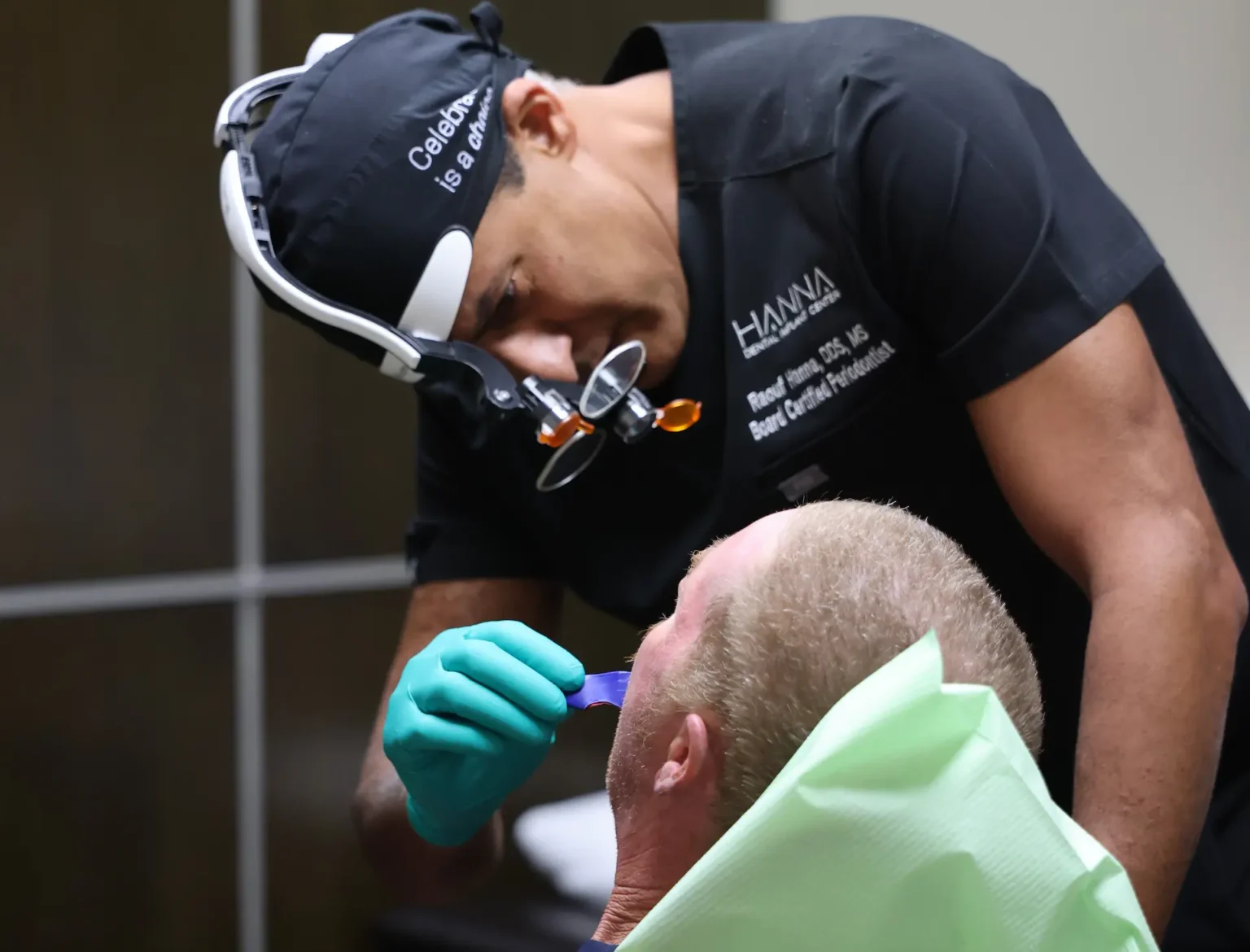
| Most adults with missing teeth may be able to get dental implants. We will look at the health of your mouth, the amount of bone available, your ability to heal, and the type of treatment you need. Factors such as age, diabetes, bone loss, gum disease, smoking, teeth grinding, osteoporosis, autoimmune conditions, previous cancer treatment, bariatric surgery, or sinus problems do not automatically rule out dental implants. They simply help your dental team plan the safest and most suitable treatment for you. In some cases, a dental or medical issue needs to be treated before implant surgery. For example, an active infection or poorly controlled blood sugar may need to be addressed first. Once the issue is managed, you may still be able to move forward with implant treatment. A consultation and 3D scan can help us determine what treatment you need and whether any preparation is required before placing your implants. |
This is one of the most common questions Houston patients bring to a consultation, and the uncertainty is understandable: a health condition, an age, or a diagnosis online is not the same as a clinical evaluation. This guide covers the question the way patients actually ask it: whether a person is generally a candidate, whether age matters, how specific medical conditions are handled, what the current state of the mouth allows for, which habits affect success, whether it is ever too late, and what happens when a patient is not ready yet.
At Hanna Dental Implant Center, we help patients in Houston and nearby communities, including Cypress, Pasadena, Missouri City, Sugar Land, Aldine, and Rosenberg, explore their options for dental implants and implant-supported tooth replacement.
During your consultation, we look at your oral health, available bone, and overall needs to determine whether implants are right for you. This may include a 3D cone-beam CT scan to get a detailed view of your jaw and identify whether any additional treatment is needed before implant placement.
This guide provides general information to help you understand dental implant treatment. Your individual treatment plan will depend on your needs and will be determined after a complete evaluation by our dental specialists.
Key Takeaways
- Most health conditions do not automatically rule out dental implants. Conditions such as diabetes, osteoporosis, autoimmune disease, previous cancer treatment, and bariatric surgery can affect treatment planning, but they do not necessarily prevent you from getting implants.
- There is no set age limit for dental implants. Your overall health, bone quality, and ability to heal are more important than your age.
- Gum disease and blood sugar levels should be managed before surgery. If you have active gum disease or poorly controlled blood sugar, we recommend treating these issues first.
- Bone loss and sinus problems can often be managed. Depending on your needs, bone grafting, a sinus lift, or a full-arch implant solution may provide the support needed for treatment.
- Smoking and teeth grinding can affect implant healing and long-term success. We take these factors into account when planning your treatment.
- A full evaluation is needed to determine if implants are right for you. A 3D cone-beam CT scan, implant stability testing, and a review of your overall health give our dental specialists the information they need to create an appropriate treatment plan.
Not Sure If You Qualify for Dental Implants?
-
Get $350 free consultation & CT scan
Who Is a Good Candidate for Dental Implants?
Many adults may be candidates for dental implants. A good candidate generally has healthy or treatable gum tissue, sufficient bone volume or a feasible way to create the required foundation, and overall health that supports healing. The exact requirements vary depending on the number and location of implants, whether additional procedures are needed, and the type of restoration planned.
Some patients may need another dental or medical issue addressed before implant treatment can proceed. Active periodontal disease and poorly controlled diabetes can affect healing and may need to be managed before surgery. In other cases, available bone, oral anatomy, overall health, or other clinical factors may require a different treatment approach.
| What Is Evaluated | Why It Matters |
|---|---|
| Bone density in the jaw | The implant requires sufficient bone to fuse to and remain stable long-term |
| Gum tissue health | Infected gum tissue compromises healing before treatment begins |
| Overall health stability | Conditions such as diabetes must be managed, not eliminated, to proceed |
| Healing capacity | Smoking, certain medications, and some conditions slow the healing process |
Can Same-Day Dental Implants Work for You?
Same-day or immediate-load implant treatment may allow a patient to receive a temporary crown or restoration during the same treatment period as implant placement rather than waiting for the final restoration. Whether this approach is appropriate depends on factors such as implant stability at placement, bone and soft-tissue conditions, the planned restoration, and the patient’s overall treatment plan.
Hanna Dental Implant Center offers same-day treatment for single-tooth, multiple-tooth, and full-arch cases. When the clinical conditions are not appropriate for immediate loading, additional treatment or a different timeline may be recommended.
How Candidacy Is Actually Tested and Confirmed
Candidacy is determined through direct measurement, not a checklist. A 3D cone-beam CT scan provides detailed information about bone volume, anatomy, implant position, and nearby structures. A full medical history review identifies anything that requires planning around.
During implant placement, insertion torque can provide information about the implant’s primary mechanical stability. Other clinical methods may also be used to monitor implant stability during healing. For patients with certain health conditions, blood work may also be reviewed to confirm the body is ready to heal. Together, these findings help the dental team determine whether implant treatment is appropriate and if additional treatment is needed first.
What Can Disqualify Someone From Dental Implants?
Dental implants are not appropriate for every patient or every situation. Factors that may prevent or delay treatment include uncontrolled medical conditions, active oral infections, insufficient bone or unsuitable anatomy, certain effects of cancer treatment, medications or health conditions that significantly affect healing, or an inability to safely undergo the planned procedure.
Some factors can be addressed before implant treatment, such as periodontal disease, insufficient bone, or poorly controlled blood sugar. In other situations, the dental team may recommend a different treatment approach. A clinical evaluation is necessary to determine which category applies to an individual patient.
Does Age Matter?
Is There an Age Limit for Dental Implants?
There is no single upper age cutoff for dental implants. Age alone does not determine candidacy. Older adults may be suitable candidates when their oral health, available bone, general health, medications, and ability to undergo and maintain the planned treatment support implant therapy. Individual outcomes vary, so candidacy is determined on a case-by-case basis.
Are Dental Implants Worth It at 70?
Yes, being 70 or older does not automatically rule out dental implants. The evaluation considers oral health, available bone, medical conditions, medications, healing capacity, and the patient’s ability to undergo and maintain the planned treatment. The same core clinical factors are considered regardless of age, although older patients may require closer review of medical history and medications when appropriate.
Dental Implants for Seniors
Seniors make up one of the largest groups of implant patients. Missing teeth accelerate jawbone loss and gradually change facial structure over time, and implants help prevent both. The evaluation process does not change with age, though closer attention is typically given to medication history and healing capacity, since both tend to vary more within this age group.
Can Teenagers Get Dental Implants?
Dental implants are generally delayed until jaw growth is complete. Chronological age alone is not enough to determine readiness because the timing of jaw development varies between individuals. A dental professional may use growth history, clinical examination, and imaging to determine whether development is complete. Temporary tooth-replacement options may be considered while growth continues.
Is 40 Too Young or Too Old?
Neither. Being 40 does not automatically make someone too young or too old for dental implants. Candidacy depends on oral health, available bone, general health, healing capacity, and the specific treatment being considered.
| Age Range | What Matters Most |
|---|---|
| Teens (under 16-18) | Jaw growth must be complete first; temporary options bridge the gap |
| 40s | Usually the most straightforward candidacy window; bone and healing are typically strong |
| 70s and beyond | Overall health and bone density, evaluated individually, not age itself |
Can You Get Dental Implants If You Have Certain Health Conditions?
Diabetes
In most cases, yes, provided blood sugar is reasonably well controlled. More than 40 million Americans, roughly 1 in 8 adults, live with diagnosed or undiagnosed diabetes, making it one of the most common conditions encountered in a candidacy evaluation. Uncontrolled blood sugar slows healing and raises infection risk, both of which can interfere with osseointegration, the process by which an implant fuses to the jawbone. Blood sugar stability is typically confirmed with a patient’s physician before surgery, and healing is monitored more closely afterward as a result.
Osteoporosis
Osteoporosis does not automatically rule out dental implants. Treatment planning should consider bone condition as well as the medications being used to manage osteoporosis. Evidence regarding implant outcomes in patients receiving antiresorptive therapy is still developing, and these medications should be reviewed because they may affect treatment planning and are associated with a small risk of medication-related osteonecrosis of the jaw. The dental team can consider the patient’s individual bone condition, medications, and overall health when planning treatment.
Autoimmune Disease
People with autoimmune conditions may be candidates for dental implants, but candidacy depends on the specific condition, disease activity, oral health, medications, and overall health. Autoimmune conditions and some medications used to manage them can affect inflammation or healing. The dental team reviews the specific diagnosis and current medications and may coordinate with the patient’s physician when appropriate.
Cancer
A history of cancer does not automatically rule out dental implants, but candidacy depends heavily on the type of cancer, treatment received, current health, and whether radiation involved the head or neck. Chemotherapy and radiation can affect oral tissues and healing, while radiation involving the jaw can have a significant effect on implant treatment planning. Patients receiving or recovering from cancer treatment should have implant timing coordinated with their dental and oncology teams rather than following a fixed timeline.
Chemotherapy
Chemotherapy can affect oral health and overall healing during active treatment. Whether dental implants are appropriate after chemotherapy depends on the cancer history, treatment received, current health, and condition of the mouth and jaw. Patients currently receiving chemotherapy should have implant timing coordinated with their oncology and dental teams rather than relying on a fixed waiting period. In the meantime, maintaining oral health can help protect the remaining teeth and tissues.
Bariatric Surgery
Bariatric surgery does not automatically rule out dental implants. Depending on the type of surgery and the patient’s nutritional status, there may be a greater risk of deficiencies involving nutrients important to bone and overall health. Calcium, vitamin D, protein, and other nutritional factors may therefore be reviewed as part of treatment planning. Coordination with the patient’s surgeon, physician, or other healthcare provider may be appropriate when nutritional deficiencies or other health concerns are present.
Metal Allergies
True hypersensitivity to titanium appears to be uncommon, but suspected reactions should be evaluated carefully because the available clinical evidence is limited. A known or suspected metal sensitivity should be discussed during the dental implant consultation. In selected cases, zirconia implants may be considered as an alternative material when clinically appropriate.
Wondering How Your Health History Affects Your Options?
-
Get $350 free consultation & CT scan
Can Your Mouth Still Support Dental Implants?
Bone Loss
Bone loss does not automatically rule out dental implants, but it can affect the type and timing of treatment. Bone grafting or other procedures may be recommended when the available bone does not provide the anatomy or stability needed for the planned implant. For more advanced bone loss in the upper jaw, zygomatic implants may be considered in appropriately selected patients. Because these implants anchor in the cheekbone rather than severely resorbed areas of the upper jaw, they can sometimes reduce the need for conventional bone grafting. A 3D cone-beam CT scan can help the dental team evaluate the available bone and surrounding anatomy when planning treatment.
Gum Disease
Yes, once the infection is under control. Gum disease, or periodontal disease, is one of the leading causes of adult tooth loss in the United States; recent CDC data shows that more than 4 in 10 adults over 30 have some form of it. Placing an implant into infected or unstable gum tissue undermines the foundation the implant needs in order to heal successfully. Active gum disease is treated first, typically with deep cleaning, scaling, and root planing, and implants proceed once healthy tissue is confirmed. This is a matter of sequencing, not permanent exclusion.
Missing All Your Teeth
Yes. Living without any natural teeth affects far more than appearance. It limits the foods a patient can comfortably chew and accelerates jawbone loss over time. For patients in this position, All-on-4 and full mouth dental implants replace a complete arch using a small number of strategically placed implants. Which approach fits depends on remaining bone volume: a fixed bridge, an implant-supported denture, or zygomatic implants for more advanced bone loss are each weighed against the patient’s specific anatomy.
Sinus Problems
Many sinus conditions do not automatically rule out dental implants, but the specific condition and anatomy need to be evaluated before treatment. The sinuses sit close to the upper back teeth, and bone loss after tooth loss can reduce the available space for implant placement. A 3D scan can help the dental team evaluate the relationship between the planned implant site and the sinus. When additional bone is needed, a sinus augmentation may be considered before or during implant placement.
Lifestyle Factors That Affect Implant Success
Smoking
Smoking does not automatically rule out dental implants, but it is associated with a higher risk of implant failure and peri-implant complications. Smoking can impair blood flow and healing around the implant site, which can affect the tissues and bone involved in recovery. Patients who smoke should discuss cessation with their dental team before implant treatment. The dental team can provide recommendations based on the planned procedure and the patient’s smoking history.
Teeth Grinding (Bruxism)
Teeth grinding, or bruxism, does not automatically prevent dental implant treatment, but it does require additional planning. Severe grinding places repeated force on the implant and restoration, which can interfere with healing or increase the risk of long-term complications. A custom night guard is often recommended, and more durable restorative materials, such as zirconia, may be used to better withstand biting forces.
Braces
Dental implants and braces can be part of the same treatment plan, but the timing is important. Because an implant is fused directly to the jawbone, it cannot move with orthodontic treatment like a natural tooth. In many cases, braces are completed before implant placement so the implant can be positioned correctly. If an implant is already in place, the orthodontist plans tooth movement around it to achieve the desired alignment.
Timing Questions
When Is It Too Late to Get Dental Implants?
There is rarely a single point at which tooth loss becomes “too old” for dental implants. The amount and condition of available bone, gum health, general health, medications, and the planned restoration matter more than the number of years since the tooth was lost. Bone grafting or other surgical approaches may be considered when the available anatomy has changed over time. The dental team evaluates the current condition of the mouth and jaw when determining whether implant treatment is appropriate.
When You May Need Additional Treatment Before Dental Implants
Several of the factors covered on this page do require treatment before implant surgery, not instead of it. Understanding what that looks like in advance makes the process considerably less confusing.
- Bone grafting: may be recommended when the available jaw does not yet have sufficient volume or density to support an implant securely. This is most common after long-term tooth loss, advanced gum disease, or significant bone loss.
- Periodontal treatment: active gum disease is treated first, typically with deep cleaning, scaling, and root planing, so the implant has healthy tissue to heal into.
- Smoking cessation support: quitting, even temporarily around the surgery date, meaningfully reduces the risk of implant failure and is incorporated into the treatment timeline for patients who smoke.
- Medical clearance: patients managing diabetes, autoimmune disease, cancer treatment, or a recent bariatric procedure may need confirmation from their physician that they are stable enough to heal well.
- Orthodontic treatment: patients pursuing both braces and an implant typically complete orthodontic work first, so the implant is placed in its final position.
- Diabetes management: blood sugar is stabilized in coordination with the patient’s physician before surgery, since uncontrolled levels slow healing and raise infection risk.
These factors do not necessarily rule out implant treatment, but they can change the timing, treatment approach, or need for additional evaluation. The dental implant procedure guide covers what each stage of treatment involves once a patient is ready to move forward.
Frequently Asked Questions
Who is not a good candidate for dental implants?
Some patients may need to address an oral or medical issue before implant treatment can proceed. Examples can include active periodontal disease, poorly controlled diabetes, insufficient bone, certain effects of cancer treatment, or other factors that affect healing or surgical risk. In some cases, additional treatment can make implant placement possible. In others, a different tooth-replacement option may be more appropriate.
Is there an age limit for dental implants?
No upper age limit exists. Patients in their 70s, 80s, and beyond regularly receive implants successfully. Overall health and bone quality matter far more than age.
Can I get dental implants if I have cancer or am undergoing chemotherapy?
A history of cancer does not automatically rule out dental implants. However, active cancer treatment, chemotherapy, radiation involving the head or neck, current health, and the condition of the jaw and oral tissues can all affect timing and treatment planning. Patients receiving cancer treatment should have implant timing coordinated with their oncology and dental teams.
Can I get dental implants after gastric sleeve or lap band surgery?
Yes. These procedures can affect nutrient absorption and increase acid exposure, raising the risk of enamel erosion and decay, but they do not rule out implants. Nutrient levels and bone health receive closer attention beforehand.
Can I get dental implants if I have sinus problems?
Yes. Many sinus conditions do not automatically rule out dental implants. 3D imaging can show the relationship between the planned implant site and the sinus, and a sinus augmentation may be considered when additional bone is needed.
Can I get braces if I already have a dental implant?
Yes. The implant itself does not move, but an orthodontist can plan treatment to shift the surrounding teeth around it for a balanced result.
When is it too late to get dental implants?
Rarely, even years after tooth loss. Bone grafting and similar techniques can work with bone that has declined over time.
What if I’m not ready for dental implants yet?
Common next steps include bone grafting, periodontal treatment, smoking cessation support, or medical clearance from a physician. The evaluation identifies exactly what applies and how long it takes.
Next Step: Find Out If You’re a Candidate
The best way to determine whether dental implants are appropriate is a full clinical evaluation that considers oral health, available bone, medical history, and the planned restoration. Online information and eligibility quizzes can help patients prepare for a consultation, but they cannot replace an individual clinical assessment. Some patients who are not ready for implant placement may first need treatment or additional evaluation before candidacy can be determined.
Once treatment is ready to move forward, the Dental Implant Procedure guide covers what treatment involves, and the Dental Implant Recovery guide covers what healing looks like afterward. General dental implant cost and financing information is also available, or patients may contact our team directly to discuss their case first.
Ready to Find Out If You're a Candidate?
-
Get $350 free consultation & CT scan
Medically Reviewed by Hanna Dental Implant Center
Hanna Dental Implant Center is a Houston-based specialty implant practice serving patients throughout Houston, TX and surrounding communities.
947 Gessner Rd, #A-230, Houston, TX 77024 | Phone: (713) 400-0259